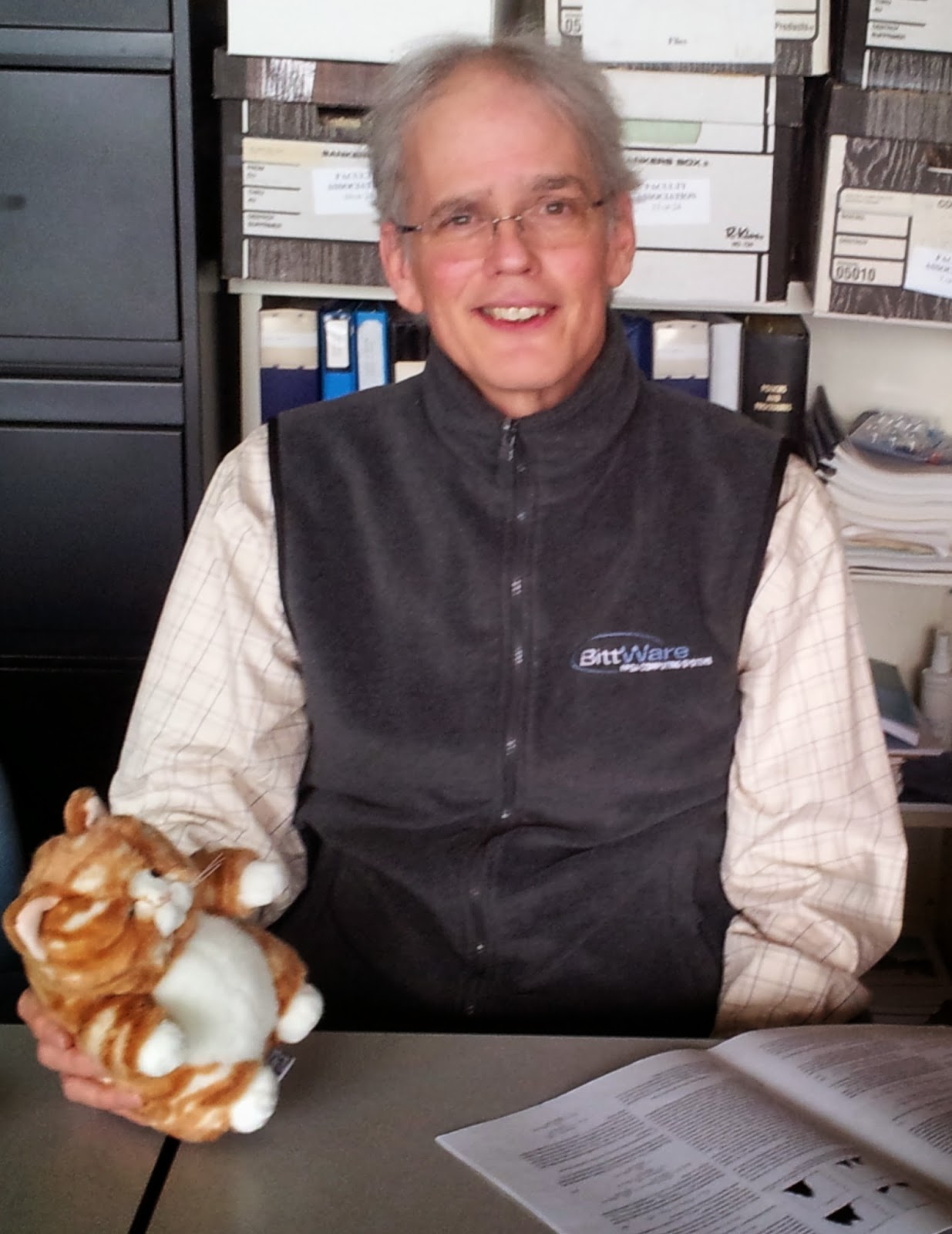
FAUW Updates Fall 2014 (Part 1 of 2)

David Porreca, FAUW President

Welcome back! Although this blog went dormant over the summer months, this does not mean that FAUW has been idle. In fact, so many things have kept us busy of the past couple of months that this inaugural 2014-15 update blog post needs to be divided in two. The first five of the following topics are posted today, while the rest will be posted on Monday.

The topics:

  1. Continuity in UW administration
  2. Meeting with lecturers
  3. Negotiations
  4. Scheduling
  5. Electronic expense claims
  6. Pharmacy Building
  7. Fall Break?
  8. FAUW Staffing
  9. Re-vamped Course Evaluations
  10. FAUW Retreat and Priorities for 2014-15
Continue reading “FAUW Updates Fall 2014 (Part 1 of 2)”

Vote Results & Discussion: MoA Outstanding Performance Award (OPA) Changes

David Porreca, FAUW president

This week’s post features the results from the poll FAUW conducted at the beginning of the month to do with the proposed changes to the Memorandum of Agreement’s clauses relating to the OPAs.  Please see the previous post for more discussion.

The Results

The changes passed by an overwhelming majority:

Declined 4
No 47
Yes 283

Follow-up Issues

In the course of answering questions relating to the vote, a number of larger-scale issues and concerns have come up.

Firstly, the optics from the perspective of the average Ontario citizen of having professors who already receive merit pay increases award themselves yet further bonuses may not be the best thing for the university’s reputation in the current political climate.  That said, the results of the provincial election indicate that this fear may be overblown.  Moreover, since the OPAs are drawn from the merit pool itself, they do not represent extra bonuses, but rather an in-principle meritocratic redistribution of said increases.

Secondly, and perhaps more importantly from a broader perspective, does the merit system of increases we have do the job it’s supposed to do?  Does the productivity that it’s supposed to encourage actually manifest?  Do the professional antagonisms, time consumed in the evaluation process itself, as well as in any appeals that result, represent a net positive for the university’s operations?

I would encourage each of you to think about these questions and contact FAUW with any thoughts or reactions.  We may even conduct a formal poll of our members to find out what they think about these questions.

Memorandum of Agreement – Article 13.3.3(e) Changes Explained + Q&A

UPDATED Q&A (30-May-14)

David Porreca, FAUW President

On Monday, the Faculty Association circulated an e-mail that lays out the changes in wording to the Memorandum of Agreement we have discussed both at the FAUW Board of Directors and at the Faculty Relations Committee over the past few months.  This blog post is intended to a) explain more fully the reasoning behind the changes, and b) to respond to some of the questions and feedback that we have received since the message went out.

Why the changes?

Concerns had been expressed to the Faculty Association that the Outstanding Performance Awards (OPAs) in some faculties were being given to reward individuals who hold higher-level administrative positions (e.g., chairs of large departments, associate deans) rather than for their originally intended purpose to reward outstanding researchers and teachers.

Since service is one of the components of our job as faculty members, it made sense to us that rewarding truly exceptional service should still happen, while avoiding the potential for a systemic over-rewarding of administrators who are already well-compensated for their job.  That is why the new wording of Article 13.3.3(e) carefully ascribes a maximum of 20% of the OPAs granted in any given faculty and year be granted for service.

Moreover, outstanding service in non-administrative capacities can now be adequately rewarded under this new wording, which was not possible before.

The choice of 20% corresponds to the usual proportion of our duties dedicated to service.

Q&A

Q. So how exactly will these stars be identified?

A. This is a question that is more properly directed to each individual Dean.  The MoA article specifies that “Members in each Faculty unit (department or school) whose annual performance rating for the current year is within the top twenty percent of ratings within the unit may be considered for a special permanent salary increase.”  Departmental merit evaluation committees are responsible for assigning merit ratings, and from there the process is in the Dean’s hands.  By specifying a maximum of 20% of awards going toward ‘Service’, we minimize the potential for a buddy-administrator reward system, and allocate the large majority of the OPA funds to their intended purpose: to reward excellent teaching and research.

Q. Will there be a clear distinction as to what type of award is being given (i.e., whether it’s teaching/research or whether it’s service)?

A. At the moment, there is no provision for specifying the reason for each award, but it is certainly something that we can quite reasonably request for the sake of transparency.

Q. Does anyone receive this award for outstanding teaching?

A. There is no provision for separating teaching from research in the determination of the OPAs, and the original intent was to reward those who do both outstandingly well.  The only specification we have now added is that up to 20% of the awards can now be for service.  It was never really clear in the past why each individual received an OPA.  By scanning the list of OPA recipients from 2013, you can form your own opinion as to the rationale behind those names chosen.  As was mentioned above, it will be important for the transparency of the process that those receiving an OPA in the future be identified as receiving it for outstanding service or research + teaching.

Q. Aren’t OPAs based on overall performance?

A. No, they were originally intended to reward outstanding teaching and research, with no mention of service at all.  Over the years, however, it became clear that at least some of the recipients had been primarily involved in administrative tasks.  In order both restore the original intent of the OPAs and to create a mechanism whereby outstanding service can be recognized, the proposed changes are being put forward.

Q. How does this change to the MoA intersect with FAUW’s concerns over the document defining the standards for a 1.25 merit rating in the Faculty of Arts?

A. The two issues are only tangentially related, since the document defining the standards for 1.25 in service has as its intended audience individual departments’ merit evaluation committees, while the MoA article is meant to govern how deans handle the distribution of OPAs after the departmental evaluation committees have completed their work.

Q. If Deans have not followed the existing rules such that these changes to the MoA are needed (i.e., giving OPAs for service when they’ve not been meant for service at all), then what guarantee do we have that they will follow the rules limiting 20% of these awards for service? 

A. Alas, there is no perfect system, and there are no 100% guarantees. It’s our hope that the added transparency of having the reasons for each award published along with the recipients’ names will generate enough potential for opprobrium that abuse of the system will become rarer or, ideally, be eliminated altogether.


Why UW, Part 2

Happy first day of Spring term! Today, FAUW President David Porreca continues his list of the ways that UW operates far differently from other institutions, and how those ways contribute to our success.

6) An astute Board of Governors

UW has been blessed with a financial situation that has been much more favourable than other places. It is the responsibility of the Board of Governors to tend to such matters, and on this front, the Governors have been very successful in fulfilling their mandate.

7) A faculty-friendly working environment

  1. There are few (if any) other institutions that offer a 6-month sabbatical leave for tenure-track faculty members after their first contract.
  2. UW offers 100% ownership to the creators of the intellectual property generated on our campus.
  3. UW offers an automatic one-year delay on the tenure clock for those taking parental leave.
  4. The consolidated daycare, with 160 spots, opened in early 2014, is a potent recruitment device for prospective faculty members with young families.
Continue reading “Why UW, Part 2”

Why UW? Reflections on How UW Operates

David Porreca, FAUW President

In my 22 months’ experience as FAUW President, I have had the opportunity to attend a number of meetings with my counterpart colleagues from other institutions at the provincial level under the auspices of the Ontario Confederation of University Faculty Associations (OCUFA – of which our own Kate Lawson is President) and at the federal level under the Canadian Association of University Teachers(CAUT). At these meetings one thing inevitably stands out to me in the starkest possible terms: how differently UW operates as compared to other institutions.

Generally speaking, the tone of interaction between faculty representatives elsewhere and their institutions is one of chronic mistrust and by-default antagonism. By contrast, UW manages to operate smoothly, with open and constructive dialogue on issues and concerns happening through well-recognized, well-respected and effective channels (e.g., Faculty Relations Committee (FRC), FAUW’s Academic Freedom and Tenure Committee (AF&T)).

In my experience observing other large organizations both academic and non-academic, institutions end up with the unions they deserve, initially as a result of poor management. UW somehow has avoided such pitfalls.

So, what makes UW operate so differently? I’ve been puzzling over this question and have the following speculations to offer, most at the intersection of faculty working conditions and financial considerations:

Continue reading “Why UW? Reflections on How UW Operates”

Random Reflections on MOOCS – Your Research in the Form of a Kitten

George Freeman, FAUW Past President

What a wonderful world that has comedians in it!  I say this because people sometimes ask what it’s like (from the point of view of an engineer in my case) to be involved with university politics through FAUW or its umbrella organizations (OCUFA and CAUT).  It’s really hard to explain but if you have seven minutes and thirty-four seconds to spare, you can actually sample the emotional side of the story via a satirical video entitled “The Expert (Short Comedy Sketch)”  by Lauris Beinerts which has swept through the gossip channels of the technology world this past week

To fully appreciate the video, watch it right to its end.  The basic premise is a meeting (“Our company has a new strategic initiative” ) of some marketing and business types with an expert in the drawing of red lines.  As the story starts, the expert is told “We need you to draw seven red lines.  All of them strictly perpendicular; some with green ink and some with transparent. Can you do that?”  It is the expert’s evolving attempts at rational opposition, and his ultimate stance, which seem so representative of universities and their evolving relationship to the political-industrial forces in society.
I’d like to postulate an Anderson scale (after the expert in the video clip). 
Let’s define early Anderson by his response of “To draw a ‘red line’ with green ink is – well if it is not exactly impossible, then it is pretty close to being impossible.”  Most faculty representatives to political bodies, myself included, look like early Andersons.  We believe in arguments based on fact, truth revealed though replicable proof.  Scholarship, in short.
Let’s define middle Anderson by his response of “OK. Let me draw you two perfectly perpendicular red lines, and I will draw the rest with transparent ink.”  Sounds like a good university administrator to me.  Saying close to what government and industry wants to hear but projected on the axes of what we believe possible or desirable.  Think Waterloo’s strategic plan, its strategic mandate agreement with the province, or our salary settlement under the ‘zero-zero’ directive.  At best, promoters and protectors of scholarship (and why good administrators must themselves be scholars).  Viewed by scholars as bending the truth half the time.

This leaves late Anderson, defined by his final response of “Of course I can. I can do anything. I can do absolutely anything.  I’m an expert!”  In the world of business and politics, people like experts to give solutions, not expose problems.  Pointing out that the space of feasible solutions is empty will often get you the look on the left – what I interpret as dreams deflated by facts so far from the listener’s comprehension that she can’t experience them as factual, only as disappointment in the speaker.  Naïve regarding scholarship and offended by its argumentative, exploratory flavour, in short.

Cuddled up to this domain of infeasible solutions seems to live a concentration of higher-education commentators and consultants.  Lately, they like to talk about big cost savings in university teaching.  Think HEQCO and its reportsThink Robert Dickeson and his program prioritizationsThink William Bowen and MOOCs.  I have some early-Anderson thoughts on Bowen’s and Dickeson’s books which I hope to write into posts.
Professor George Freeman

What about your research and the kittens?

The utterance which will not leave my head, the question to the red-line-drawing expert which prompts Anderson’s final response in the sketch, is “When you inflate the balloon, could you do it in the form of a kitten?”  I hope you’ve watched the video so you fully appreciate the balloon (“It’s red”) and the kitten (“Market research tells us our users like cute animals”).  I claim we can map the expert to a researcher, balloon inflation to a researcher made to align his or her field with a strategic direction imposed by someone else, and the kitten to research which must take a completely pre-specified form in terms of its conduct, presentation, and impact.  The research environment of 2014 in Ontario universities in a nutshell (unless you have early luck or your natural expertise is in one of the balloon-inflating areas, and you carefully follow a few pragmatic rules along the way).
Unfortunately, if your experts in lines must inflate balloons in the form of kittens, resource consumption, in both time and money goes up sharply.  Both in the research and in the balloon-accountability, kitten-measuring support staff.  One of the strangest aspects of university politics is that research is primarily assessed by how inefficiently it is done (numbers of dollars, researchers, papers, or citations) without any per-unit normalization.  Thus, this inefficiency looks good, is compared and rewarded.  Quality has a downward force acting on it.  Volume (cost) has an upward force acting on it.  How this ultimately plays out is obvious to anyone near my age who grew up watching the late-1970s Ford Motor Company or the Vietnam war.
What does any of this have to do with teaching and MOOCs, you might ask?
My observation would be that a true ‘university course of study’ is an extension of the scholarship world of the expert to include the evolving minds of students.  I would place this in juxtaposition with a simple ‘course taught at a university,’ i.e., the public mindset of a pre-existing body of knowledge moved into the student’s head by some actions on the part of very expensive experts, and then certified.  Something which is just a ‘course taught at a university’ is little better than a good book read in a university library – the university plays a very small part in it.  Full-scale automation might make economic sense there.  However, a true ‘university course’ depends heavily on scholarship and its supportive environment.
In my humble opinion, what we see happening with the balloons and
kittens is the space of scholarship being taken up by an unnecessarily large volume of formulaic research activity.  Little is left for the other reason for the universities’ existence, those evolving minds of the students.  This is squeezed over time into the hands of staff, non-research faculty, low-paid sessionals, or computers.  In a society increasingly reliant on innovation for prosperity, I think we want more true university courses, more of the scholarship space opened up to teaching and learning.  This needs a reward structure vastly different from the so-called ‘world class’ one being cemented into place now.

FAUW Video: Being President

In our first video, David Porreca discusses some of the triumphs and some of the trials of being president of FAUW. Look either here or on our YouTube channel for a new video every Friday, at least until summer. If you’re a faculty member and would like to talk about your teaching, research, service, or have another video idea, please let us know on Twitter!


We hope to see you next week on Tuesday, April 8, from 11:00 – 13:00 in DC 1302. Join us for lunch and a discussion of issues currently facing faculty members at Waterloo.